
The left should stand for the defeat of the United States and Israel
Donald Trump has bombed Iran in a terrifying move that will unleash more death and destruction across the Middle East.
The whole movement must oppose the drive to war. The 50501 movement is working with other groups to call “No More War” protests across the country today, Sunday June 22nd, and the Answer Coalition has also planned rallies and marches in various cities.
Trump boasted that the United States had carried out “very successful” air strikes on nuclear facilities at Fordow, Natanz and Isfahan on Sunday. And he warned Iran against retaliation, saying, “Remember, there are many targets left.”
Israeli prime minister Binyamin Netanyahu praised Trump’s “bold decision” to target Iran with the “awesome and righteous might of the US”. “It has created a pivot of history that will help lead the Middle East to prosperity and peace,” he said in a brazen reversal of the truth.
As Netanyahu spoke, Israeli forces launched another “wave of attacks against military targets in western Iran.” The Israeli Defense Minister threatened to “burn Tehran.”
Israeli strikes began on June 13. Eyewitnesses in Tehran report that, by June 19th, the Israeli attacks were unprecedented, with many neighborhoods hit, anti-aircraft barrages continuing relentlessly all night, and the sky above Tehran illuminated with explosions. Already, ATMs are down, there are food shortages, and many have left the capital, but many more will not be able to afford to stay away. Already, hundreds had been killed in Iran, and over 1,000 wounded.
And now the US has stepped in with some of the rare weapons of mass destruction Israel cannot wield, the submarine-launched Tomahawk cruise missiles accompanied by the “largest B-2 operational strike in U.S. history” reportedly dropping 40 of the 30,000 lb GBU-57 Massive Ordnance Penetrators on Fordo and Natanz.
LIES
The entire war drive is based on a pack of lies.
Trump and Netanyahu claim that Iran is a “rogue state” that wants to develop nuclear weapons in secret and threaten the whole region.
But there is only one “rogue state” in the Middle East that has developed nuclear weapons in secret—Israel. It made nuclear weapons with the help of apartheid South Africa in the 1970s, but still refuses to admit it has the warheads.
The West is using the same lies about weapons of mass destruction as it did to justify its disastrous invasion of Iraq in 2003.
Iran has pursued a civilian nuclear programme. Only two days ago the International Atomic Energy Agency (IAEA) chief Rafael Mariano Gross said there was no evidence that Iran is building nuclear weapons.
The IAEA has inspected sites in Iran—Israel has always refused inspections and never signed the nuclear non-proliferation treaty.
But now Trump and Netanyahu could push the Iranian regime into developing nuclear weapons.
The US Arms Control Association said it has increased “the risk of nuclear-armed Iran”. And it warned that the US bombing would “encourage more states to consider the pursuit of nuclear weapons to thwart attacks by other nuclear-armed states”.
SPLITS?
Even Trump’s director of national intelligence Tulsi Gabbard testified there was no evidence Iran was building a nuclear weapon, and that Supreme Leader Ayatollah Ali Khamenei had not re-authorised the country’s suspended nuclear weapons programme. Yet earlier this week Trump said “I don’t care” about those intelligence assessments, and asserted without evidence that Gabbard was “wrong.”
Repeatedly over decades (see assessments in 2007 and 2010 and 2017) US intelligence agencies have concluded Iran was not pushing for nuclear weapons, and repeated that conclusion just days before the attack.
Gabbard has tried to paper over differences, but Trump’s bombing of Iran may cause further splits in his “MAGA” camp. Tucker Carlson, the racist commentator influential on Trump’s decisions, has stuck to his “America First” criticism of Israel’s attacks on Iran, and the US support for it, warning a “full-scale war” could mean the end of Trump’s presidency, even the “end of the American empire.” Steve Bannon, on the far-right of the MAGA swamp, advised against it, along with Marjorie Taylor Greene and Charlie Kirk, who warned of a split in MAGA movement. But after the bombing, Bannon concluded “the MAGA movement will back Trump” despite its opposition to military interventions. But it will be harder for even them to swallow if retaliation and conflict continue.
Trump promised that he would end “forever wars” when he was running for president. But he has made it more likely that the United States will be dragged further into one.
ISRAEL
The US bombing of Iran highlights the relationship between the US and Israel. Israel, a settler colony dependent on imperialism from the beginning, is the watchdog state of US imperialism in the Middle East.
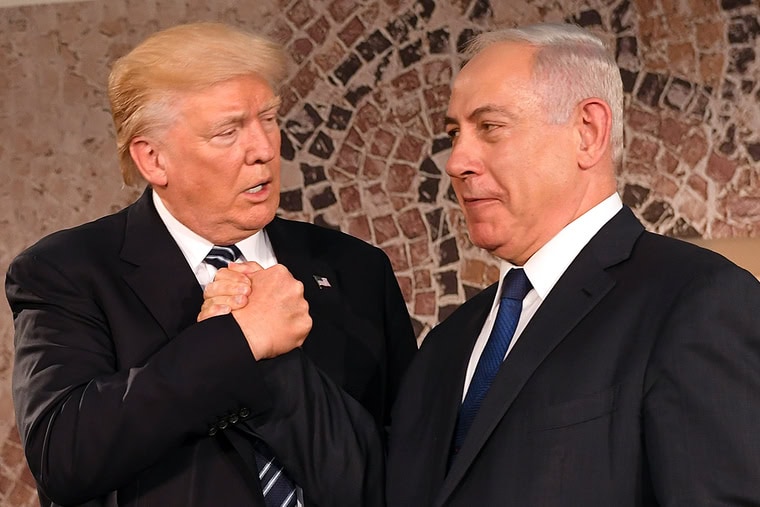
Israel’s genocide in Palestine would not be possible without US arms and funding. But it has developed to become a powerful capitalist state, no longer wholly dependent on US aid, and grown as a regional imperialist power.
This means it is able to strain at the leash more—and push for more war even if it’s against US wishes.
The scale of the genocide has caused tensions between the US and Israel. Sections of the ruling class in the US fear that the scale of its assaults could spur resistance against Arab regimes in the region.
And Western states were shamed last month into criticising Israel because of the deep crisis of legitimacy they face over backing a genocide.
But Netanyahu has been able to play the US whenever faced with the mildest criticism or calls for “restraint”.
He knows that, when push comes to shove, both the Democratic and Republican parties will back its watchdog state in the region. So Netanyahu has invaded Lebanon, grabbed more land in Syria and launched attacks on Iran to lock in Western support.
Netanyahu greeted Trump’s re-election as president last November by sacking his more “liberal” defense minister and ramping up the genocide. And he hailed Trump’s plan for the ethnic cleansing of Gaza in January.
US Imperialism in Crisis
But Trump is dealing with a deeper crisis of US “hegemony”—its ability to dominate the world—and imperial overstretch. He has sought to build links with Gulf States and the new regime in Syria and, on a recent trip to the region, snubbed Netanyahu by not visiting him.
His envoy in the Middle East, Steve Witkoff, had expressed frustration at the lack of progress in a “peace deal” in Gaza.
Trump was initially seeking to negotiate a new deal with Iran, partly due to broader imperialist rivalries with China. He rightly sees China as the main competitor to US imperialism and wants to focus on containing its rise. China buys 90 percent of Iran’s oil and has been increasing its influence in the Middle East.
Netanyahu was aghast at the thought of a US deal with Iran—and launched a series of air strikes last week. They scuppered any deal and saw the US flip from an initially muted response to the bombing of Iran.
When Trump returned to the White House, he pushed through a series of dramatic shifts in foreign policy.
His aim remained the same as previous US presidents and there was a high degree of continuity with his predecessor Joe Biden. He wanted to focus on what US and NATO policy makers call “great power competition” with China.
Trump pushed for a ceasefire in Gaza and “peace negotiations” with Russia over the war in Ukraine—and demanded European states cough up for their own security.
The Trump Whitehouse emphasized a more “transactional” approach and striking deals with individual states.
This was in contrast to the US cleaving closely to the web of alliances and institutions that it built up after the Second World War. But Trump is responding to the crisis of US power—he is also rubbing up against its limits. He cannot simply bludgeon his way to what he wants.
The deal in Ukraine still seems far away, the Middle East is in flames, the trade war aimed at China has caused splits at home, and divisions in Trump’s MAGA camp may be widened with the bombing of Iran. The left, and the working class as a whole, stand with neither side of those splits, but those cracks can be used to stop US intervention if our side mobilizes its strength. The last 18 months of protest over Gaza have built an opposition.
Build the Anti-War Movement
A Washington Post poll of June 18 found Americans opposing U.S. airstrikes against Iran by a 20 percentage-point margin, and a recent YouGov poll found that a majority of Republicans (53%) and Democrats (65%) say they are opposed to US intervention, while only 16 percent of Americans think the U.S. military should get involved in the conflict between Israel and Iran. Another poll showed only 14% said they preferred taking military action in an attempt to destroy Iran’s nuclear program. These numbers will shift as the Trump administration tries to whip up patriotic support, but is also being affected by opposition, and Trump’s falling general approval.
In addition to 50501, and Answer, Iranian left groups have called additional demonstrations in places. Whatever political differences we may have with the larger forces on US politics or the nature of Iran, we need to bring anti-war voices together, and advocate for broad, democratic planning and escalation. There is a national march on Washington called for Sat. June 28, but coalition building will also begin with local initiatives.
Some groups who oppose US Imperialism, have mistakenly held up the Iranian government, or previously Asad in Syria, as the main anti-Imperialist force, and opposed movements from below. Other opponents of the present regime, who were right to support the “Women Live Freedom” movement, have mistakenly been pulled to supporting US intervention as a more liberal alternative. As Toomaj Salehi (the Iranian rapper, whose “Rathole” was anthemic in the Woman, Life, Freedom movement) said repeatedly: “The enemy of my enemy is not my friend.” In the US we must focus our opposition on the US and Israel, and our solidarity with the people of the region and their struggles for liberation. This starts now with supporting anti-war activity, and building large, democratic movements opposed to US intervention and aid.
The Palestine solidarity movement has punctured the idea of a “liberal” West that stands for “human rights” in the eyes of millions of people. It means many more people now see through the usual lies used to justify Western wars. The nature of Israel is now clearer to a majority of anti-war protesters. At the same time, the movement to free Palestine has also, largely, learned that it is not an “Israel lobby” that pushes a neutral US state to back Zionism, but the needs of US imperialism.
In the previous Gulf wars, there were large, influential liberal forces who worked against any mention of Palestine or Israel as divisive. This is no longer plausible. We can, and must, build inclusive, broad movements against intervention that include ending US support for Israel in the demands. In London, 350,000 people marched Saturday for hands off Iran, for an end to the Gaza genocide and to stop arming Israel.
Within these movements, socialists can continue building on this analysis and opposition to imperialism, and to its roots in capitalist competition.
A collection of Independent Iranian worker’s organizations published a statement “Opposing War and Warmongering Policies” (in English here). They make clear that they “hold no illusions that the United States and Israel intend to bring us freedom, equality, or justice—just as we hold no illusions about the Islamic Republic’s repressive, interventionist, adventurist, and anti-labor policies and practices.” They rightly call now “on all labor unions, human rights groups, anti-war coalitions, environmental activists, and peace movements around the world to unite in demanding an immediate end to war, bombings, the killing of innocent people…”
While joining in this anti-war mobilization, the left needs to stand for the defeat of the US and Israel.
 Marx21 US